
The Heroine’s Journey
For most of my life, I thought healing looked like arriving.
I imagined there would come a day when I would stop repeating the same relationship patterns. I would finally become confident enough, boundaried enough, independent enough, self-aware enough. One day I would wake up and discover that I had finally become the woman I was trying so desperately to become.
But the older I get, and the more women I have the privilege of sitting with, the less I believe that's how feminine transformation works.
I think we've spent generations measuring women's growth with a masculine ruler.
The hero's journey has shaped so much of the way we understand success. It is a beautiful story. A man receives a call to adventure, leaves the familiar world, descends into the unknown, slays the dragon, and returns home transformed. Its shape is a circle. He ends where he began, but he returns carrying something he didn't have before: strength, wisdom, authority. His journey culminates in self-sovereignty.
There is something profoundly true about that story.
But I don't think it is the story of becoming a woman.
The heroine's journey has an entirely different shape.
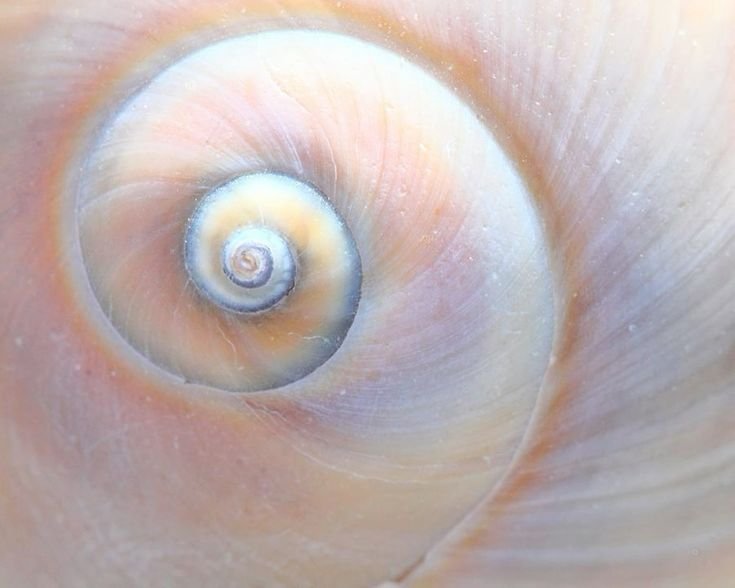
It is a spiral.
She, too, receives a call. She, too, descends into the unknown. But instead of one defining battle, she finds herself returning to the same places over and over again. The same relationship patterns. The same fears. The same questions about love, purpose, motherhood, belonging, and worthiness.
With every turn of the spiral, she experiences another death. Another letting go. Another grief. Another version of herself that must be mourned before something new can be born. The heroine is initiated not once, but hundreds of times throughout her life. She dies and is reborn through heartbreak. Through childbirth. Through betrayal. Through success. Through failure. Through aging. Through every identity she is asked to shed.
Perhaps this is why women have always been associated with cycles. The menstrual cycle. Pregnancy. Birth. The seasons. The moon. Menopause. We are not designed to become one fixed version of ourselves. We are designed to die and be reborn, over and over again. The spiral isn't a detour from the feminine path—it is the feminine path.
At first it feels like failure.
"Why am I back here?"
"I thought I had already healed this."
But the spiral reveals something that a straight line never could.
You are not returning as the same woman.
You are returning with more tenderness than you had before. More discernment. More self-trust. More compassion. The lesson may be familiar, but the woman meeting it is not.
Perhaps that is why feminine power feels so different.
It doesn't arrive all at once.
It accumulates.
Not through one courageous decision or one dramatic moment of awakening like the hero slaying the dragon once, but through thousands of quiet moments where a woman chooses herself without closing her heart. She learns to set one boundary. She tells one difficult truth. She leaves one relationship that no longer honors her. She risks loving again after heartbreak. She forgives herself. She begins again.
Power, for the feminine, is rarely explosive.
It is devotional.
It grows quietly, almost invisibly, until one day she realizes she has become capable of holding things that once would have broken her.
I often think Greek mythology understood this better than we do.
Again and again, we meet women whose power erupts before it has been integrated. Medusa. Cassandra. Clytemnestra. Medea. Each story is different, yet they all whisper a similar truth. When feminine power is seized all at once, before it has been metabolized by the heart, it often becomes destructive, isolating, or unbearable. The woman is feared, exiled, silenced, or consumed by the very force she hoped would set her free.
The heroine's journey offers another way.
It does not ask a woman to seize power.
It asks her to become capable of holding it.
Slowly.
Gracefully.
One spiral at a time.
With every descent she gathers another piece of herself. Another layer of wisdom. Another capacity to remain open when life would tempt her to close.
This is why I return so often to the final chapter of Goddesses in Everywoman by Jean Shinoda Bolen.
She writes that the culmination of the heroine's journey is not simply becoming an independent woman. It is the sacred marriage—the gradual union of the masculine and feminine within herself.
I find that image so beautiful because it completely changes what success looks like.
The hero returns home having claimed his power.
The heroine returns having softened enough to share hers.
She no longer needs to choose between strength and tenderness. Between boundaries and love. Between herself and relationship.
She has become spacious enough to hold them all.
I think our culture often mistakes feminine empowerment for radical independence. And while every woman must discover her own autonomy, I don't believe independence is where the feminine ultimately finds fulfillment.
The deepest longing of the feminine has always been communion.
Not codependency.
Not self-sacrifice.
Communion.
The ability to stand fully rooted in yourself while allowing your heart to remain completely open.
To love without disappearing.
To receive without losing your discernment.
To lead without domination.
To belong without betraying yourself.
To know exactly who you are while still allowing yourself to be transformed by love.
That is not weakness.
That is extraordinary strength.
Because an open heart is infinitely more courageous than a guarded one.
The hero returns to the same village as its champion.
The heroine does not.
Her spiral eventually carries her beyond the life that first defined her. She outgrows identities that once protected her. Relationships that could only love an earlier version of herself. Communities that no longer reflect who she is becoming.
Not because she has become better.
But because she has become more whole.
She doesn't simply return home.
She creates a new one.
A new way of loving.
A new way of belonging.
A new way of being a woman.
Perhaps that is what feminine healing has always been asking of us.
Not perfection.
Not endless self-improvement.
Not becoming untouchable.
But becoming spacious enough to hold our strength and our softness. Our independence and our longing. Our grief and our joy. Our boundaries and our love.
The heroine doesn't win.
She becomes whole.
And perhaps the truest sign that the journey is unfolding isn't that you've stopped getting hurt.
It's that, with every turn of the spiral, your heart becomes a little more capable of remaining open.